


Who hasn’t dreamed of being immortal at some point? Being able to see the wonders of the future, outlive everyone around you, keep young and healthy skin, and avoid the aches and problems of aging are just some of the things we imagine.
Immortality is one of those ideas that has been with us since humans became human. As soon as our ancestors realized they were going to die, they began to wonder if there was a way to avoid it. Since then, we have created legends, religions, magic potions and, more recently, scientific and technological theories that promise the same thing: to live forever.
But… is immortality really possible? Is it something science could achieve one day, or does it belong to fiction?
The answer, as usual, is not a simple yes or no. It really depends on what we mean by “immortality.”
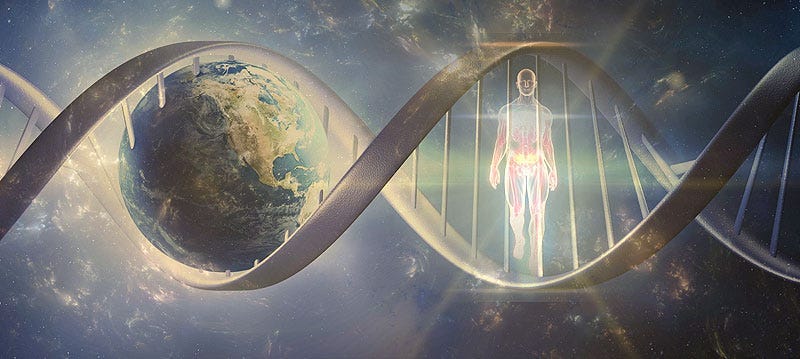
The ancient dream: magic fountains and eternal elixirs
Long before laboratories and microscopes, people were already obsessed with not dying.
In the Epic of Gilgamesh, one of the oldest texts in human history, the hero searches for a plant that will grant eternal life. In the Middle Ages, alchemists looked for the famous philosopher’s stone, which would not only turn lead into gold but also give eternal life. And during the age of exploration, there was the legend of the Fountain of Youth, supposedly sought by Ponce de León in America.
In China, some emperors drank elixirs containing mercury because they believed it would make them immortal. As you can imagine, the results were not very successful.
These stories tell us something important: the desire for immortality is not modern. It is deeply human.
What does science say? Why do we age?
To understand whether we can be immortal, we first need to understand why we age.
Our body is made of trillions of cells. These cells divide, work, wear out, and eventually die. Aging is largely the result of accumulated damage:
Damage to DNA
Errors when copying genetic material
Oxidative stress
Build-up of faulty proteins
Failures in repair systems
Our body has very advanced repair mechanisms, but they are not perfect. Over time, the damage becomes greater than the ability to fix it, and that is why we die.
Telomeres: the biological counter
One of the most fascinating parts of aging involves telomeres.
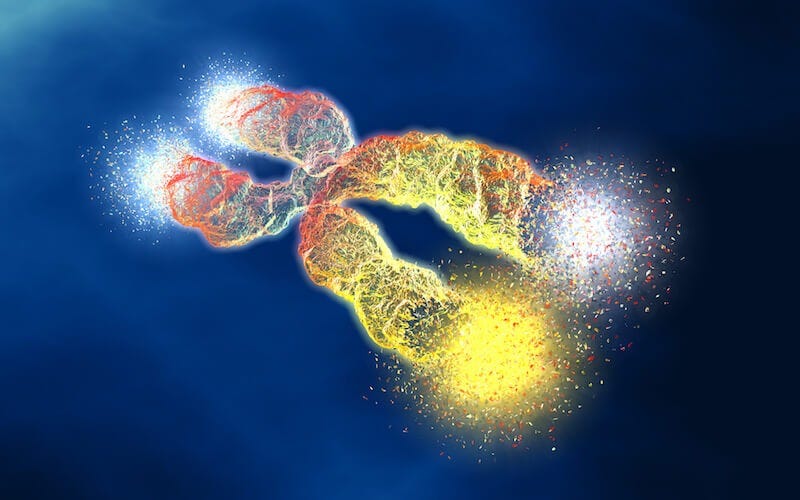
Telomeres are small “caps” at the ends of our chromosomes. Every time a cell divides, the telomeres become a little shorter. When they get too short, the cell can no longer divide and enters a state called senescence, or it simply dies.
It is as if each cell has a limited number of uses.
There is an enzyme called telomerase that can rebuild telomeres. The problem is that in most adult human cells this enzyme is almost inactive. Interestingly, in many cancer cells it is very active, which allows them to divide without limits.
And here we find an important paradox: to be “immortal” at a cellular level, we would need mechanisms that, if not carefully controlled, can cause cancer.
Cellular immortality: two possible paths
At a biological level, there are basically two ways to achieve a form of “immortality.”
1. Endless self-repair
Some organisms do not seem to age in the usual way. The hydra, a small aquatic animal, can constantly regenerate its tissues. Some jellyfish, like the so-called “immortal jellyfish” (Turritopsis dohrnii), can return to a younger stage in their life cycle.
These creatures are not immortal in an absolute sense (they can die from disease or predators), but they do not show clear signs of aging.
The idea would be to give humans that same perfect regeneration ability. But the human body is much more complex, and increasing cell division without control could create serious risks.
2. Reproduction
Here is an interesting thought: at the genetic level, we are already immortal.
Our genes come from an unbroken chain of reproduction that has lasted billions of years. Each human being is one link in that chain. The individual dies, but the genetic information continues.
From an evolutionary point of view, that is life’s true strategy for immortality.
Modern theories: from realistic to wild
Today, immortality is not searched for through alchemy, but through biotechnology.
Some areas of research include:
Therapies to lengthen telomeres
Removing senescent cells (so-called “zombie cells” that no longer work properly)
Cellular reprogramming
Gene editing with tools like CRISPR
Medical nanotechnology to repair internal damage
And then there are the more futuristic ideas.
Uploading the mind
“Mind uploading” suggests scanning the brain completely and copying its structure into a digital system. In theory, if your mind runs on a computer, you could live indefinitely.
However, there is a big problem: what survives may not really be you, but a digital copy. It would be almost like cheating yourself. Also, we still do not understand the brain well enough to make this possible.
Cryonics
Freezing the body or brain after death, hoping that future science will be able to revive you. So far, no one has been successfully brought back after full cryonic preservation. For now, it remains fiction. And it would not solve the aging problem itself, only postpone it.
Transhumanism
The transhumanist movement supports improving the human body with technology: implants, advanced prosthetics, brain-machine interfaces… basically becoming something like cyborgs. The goal is not always to avoid death completely, but to greatly extend life.
Would immortality be desirable?
Interestingly, science also asks whether immortality would be psychologically bearable.
Would we still have motivation without an end date? Could we handle losing everyone we know again and again? Would society collapse if no one died?
As hard as it is, death plays a biological and social role.

Immortality in movies and literature
This is where things get especially interesting.
Lucy
In Lucy, the main character gains superhuman abilities by using “100% of her brain.” This is based on a myth: we do not use only 10% of our brain. We use all of it, just not all at the same time. The movie mixes neuroscience with pure fantasy.
Highlander
In this story, the immortals simply are immortal. They do not age and can only die if beheaded. There is no real biological explanation. It is modern mythology.
Altered Carbon
Based on the novel by Richard K. Morgan and adapted into a TV series, it suggests that consciousness can be stored in “cortical stacks” and transferred to new bodies. This connects with mind uploading, but ignores the true complexity of the brain and personal identity.
Indiana Jones and the Last Crusade
The Holy Grail grants eternal life, but only if you stay within the temple. It is the classic magical object with arbitrary rules.
Other examples include:
The Picture of Dorian Gray: physical immortality at the cost of moral corruption.
Dracula: immortality linked to vampirism.
Blade Runner: replicants with limited lifespans as a dramatic element.
The Bicentennial Man: Isaac Asimov’s story about a robot seeking humanity and long life.
In Time: in a future where aging stops at 25, people live as long as the time left on their personal clock.
In most of these stories, fiction ignores cellular damage, cancer, molecular decay, or the complexity of the brain. Immortality is shown as a magical switch. Reality is much more complicated.
Science versus fiction
While movies reduce everything to a potion, an object, or an instant procedure, science tells us that aging is an extremely complex, multi-factor process.
There is no single button to turn off.
Any attempt to make cells divide forever faces a clear enemy: cancer. Biology is full of delicate balances. Breaking one balance to gain longer life could create even bigger problems.
So… science or fiction?
Today, human immortality is fiction.
But living longer and with better quality of life is very real science. In the last century, we have doubled life expectancy in many countries. That is already a small victory against death.
Will we live 150 years? Maybe. Will we become biologically immortal? Extremely unlikely with current knowledge. Could future technology radically change our relationship with death? It is not impossible.
Absolute immortality remains a dream. But the search for a longer, healthier, fuller life is a real scientific journey.
Perhaps the real question is not whether we can live forever, but whether we would know what to do with all that time. And that is probably more a philosophical question than a biological one.