


Time is everywhere. It wakes us up in the morning with the alarm clock, rushes us when we’re running late, and makes us feel nostalgic when we look at old photos. We say it “flies by” when we’re having fun, and that it “feels like an eternity” when we’re waiting for something important. We live inside time, but if someone asks us what it actually is… things get complicated.
St. Augustine summed it up over 1,500 years ago with a famous phrase: “If no one asks me, I know; if I want to explain it, I don’t know.” Time is a curious concept. It’s something we constantly feel, but it’s hard to define precisely.
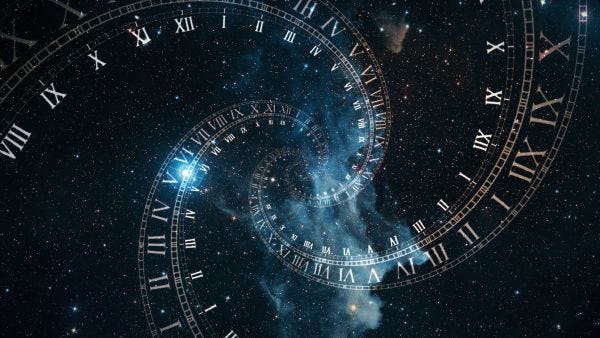
Let’s go through its history, from the earliest civilizations to modern physics, to better understand what this thing that seems to rule our lives really is.
Time in prehistory: watching the sky
Back in prehistoric times, there were no clocks or calendars, but there was something essential: the sky.
Early humans understood time through natural cycles. Day and night set the basic rhythm. The phases of the Moon provided a regular pattern. The seasons determined when it was best to hunt, gather, or plant.
Some megalithic monuments, like Stonehenge (though it belongs to a later period), show that even thousands of years before our era, people were already observing solstices and equinoxes. Time wasn’t measured in minutes or seconds, but in cycles: cycles of light, of cold, of harvests.
Our ancestors already understood that time was circular. Everything comes back around.
The order of the first civilizations
With the birth of great civilizations, time began to be organized more precisely.
In Mesopotamia and Ancient Egypt, we already find calendars. The Egyptians, for example, developed a 365-day solar calendar around 3000 BCE, based on the flooding of the Nile and the observation of the star Sirius.
In Babylon, the circle was divided into 360 degrees, a decision that influenced how we divide time. You’ve probably guessed that this is where we get 60 minutes per hour and 60 seconds per minute. That Babylonian legacy still lives on in our clocks today.
The earliest historical records that speak explicitly about time appear in religious and philosophical texts. In many ancient cultures, time was seen as cyclical (we are born, we die, we are reborn). In contrast, the Judeo-Christian tradition introduced a more linear idea, where time has a beginning and moves toward an end.
That cultural difference matters, because it influences how we understand life and progress.
How we’ve measured time throughout history
At first, measuring time meant watching shadows. Sundials were among the first instruments created to divide the day into parts. They worked thanks to the apparent movement of the Sun across the sky.
Then came water clocks (clepsydras), which measured time by the steady flow of liquid. Hourglasses were also created, and today they survive as emojis and animations that tell us our computers are busy.
In the Middle Ages, the first mechanical clocks appeared in church towers and city squares. They weren’t very accurate, but they helped coordinate urban life.
In the 17th century, Christiaan Huygens made the big leap with the pendulum clock, much more precise than its predecessors. Later came spring-powered clocks, and then in the 20th century, quartz clocks.
But the real revolution was the atomic clock.
Why a second lasts as long as it does
For a long time, the second was defined as a fraction of the solar day. Specifically, as 1/86,400 of a day (since there are 24 hours, 60 minutes per hour, and 60 seconds per minute. Simple math: 24 × 60 × 60 = 86,400).
The problem, though, is that Earth’s rotation isn’t perfectly constant. It slows down slightly over time.
So in 1967, the second was redefined in a much more precise, and mind-blowing, way. Today, a second is the time it takes for a cesium-133 atom to complete 9,192,631,770 oscillations during a specific energy transition.
Yes, that’s a very technical definition. But the important thing is that the second no longer depends on Earth, it depends on a fundamental and constant property of nature. Thanks to this, atomic clocks are so accurate that they barely lose a second in millions of years.
Newton and absolute time
In the 17th century, Isaac Newton proposed an idea that dominated for centuries. It was that time is absolute. It flows the same for everyone, everywhere, no matter what happens.
For Newton, time was like an invisible river moving steadily forward. It doesn’t depend on the observer or on events. For a long time, this idea worked perfectly for describing everyday life.
Einstein and time as the fourth dimension
Everything changed in 1905, when a guy named Albert Einstein published his special theory of relativity.
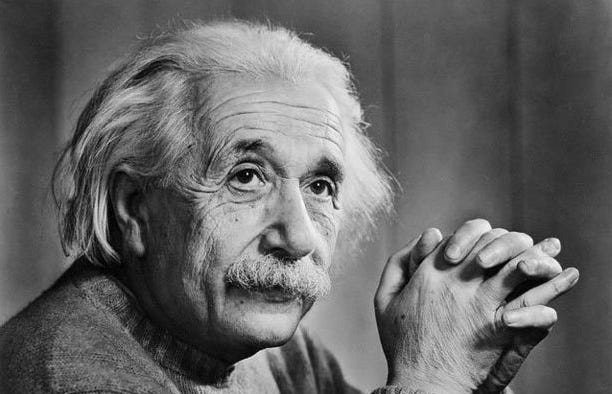
Einstein showed that time is not absolute. It depends on the observer’s motion. If you travel very fast, close to the speed of light, time passes more slowly for you compared to someone standing still. This isn’t science fiction like in Interstellar; it’s been proven experimentally.
Later, with general relativity (1915), our favorite mustache explained that gravity also affects time. The stronger the gravity, the slower time passes. Near a black hole, the effect would be extreme.
This brings up the idea that time is the fourth dimension. Is that true?
In a sense, yes. In modern physics, we talk about “spacetime”, which is nothing more than a four-dimensional structure (three spatial dimensions and one temporal). We can’t move freely through time the way we do through space, but mathematically, it’s part of the same structure.
However, it’s not identical to the spatial dimensions. It has different properties, such as a clear direction (what we call the “arrow of time”).
The arrow of time and entropy
Why do we remember the past but not the future?
Physics offers a clue through the concept of entropy, which is related to disorder. The second law of thermodynamics says that in an isolated system, entropy tends to increase.
A glass that shatters on the floor increases disorder. We never see the fragments come back together on their own and reassemble.
That tendency toward increasing disorder marks a direction: from the past (more ordered) to the future (more disordered). That, largely, is the arrow of time.
What was the beginning of time?
According to the current cosmological model, the universe began about 13.8 billion years ago with the event we all know as the Big Bang.
But here’s a fascinating question: what came before?
Some physicists, following general relativity, argue that time itself began with the Big Bang. Asking what was “before” would be like asking what’s north of the North Pole.
However, other theories, like certain models of eternal inflation or cyclical universes, propose that there might have been something before, or even multiple universes. In one of my books, I actually rely on a real (though unproven) theory that suggests our universe could have emerged from a black hole in a higher meta-universe. Isn’t that wild?
Current physics is trying to reconcile general relativity with quantum mechanics into a unified theory that would bring balance to the universe. But we still don’t have a definitive answer.
Time in literature and film
Time has always fascinated writers and filmmakers.
In literature, H. G. Wells popularized time travel with The Time Machine (1895). Later, Kurt Vonnegut played with time structures in Slaughterhouse-Five. The great Asimov created a time control agency in The End of Eternity.
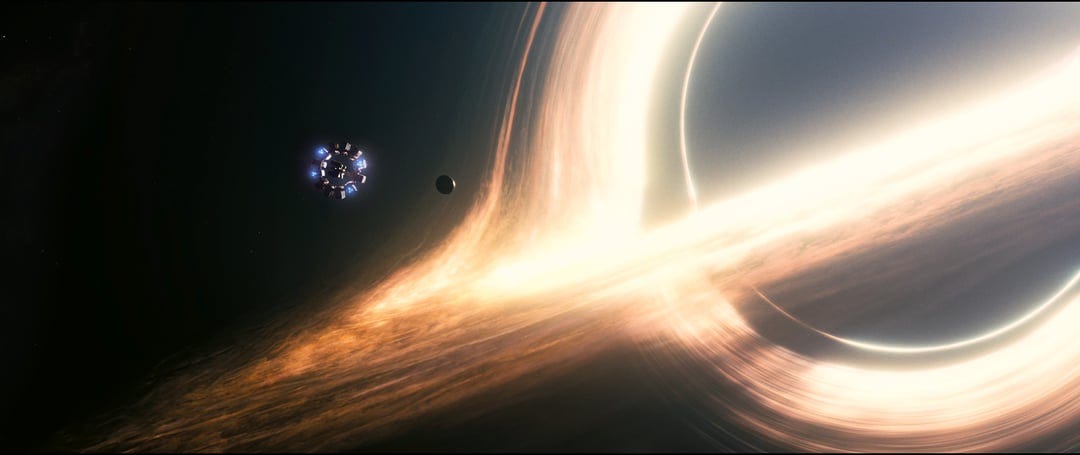
In film, movies like Back to the Future show a flexible time where changing the past alters the present. Interstellar explores time dilation as predicted by relativity. Inception plays with different speeds of time within dreams, and Tenet introduces time inversion. Yes, three of those are by Christopher Nolan, whom I idolize.
Many of these stories simplify or exaggerate physical concepts. Traveling to the past, for example, raises paradoxes that are hard to resolve, like the famous “grandfather paradox.”
But even if science fiction isn’t always rigorous, it serves an important purpose: it helps us imagine possibilities and reflect on our relationship with time.
A practical and profound concept
What I think we all know for sure is that time is both practical and mysterious.
It’s what our clocks measure, but it’s also the basis of our memory, our identity, and our history. Without time, there would be no change, and without change, there would be no life.
Throughout our history, we’ve gone from watching shadows on the ground to measuring atomic oscillations. We’ve discovered that time is not absolute and that it can stretch or compress depending on the circumstances.
And yet, we still don’t know with total certainty what it is at its deepest level.
Maybe time isn’t just something we measure. Maybe it’s the stage on which everything happens. Or maybe it’s an emergent property, something that appears when matter and energy are organized in a certain way.
Either way, as we try to understand it, time keeps moving forward. And as always, it stops for no one. We’d better make the most of it.